18 July 2026
5 Things To Check Before Choosing BBA After 12th
Choosing a BBA college is a major decision that has to be made by many students after finishing their 12th. With hundreds of colleges offering similar degrees, students often compare ranking, campus life, fees, placement, etc. While these factors are important, they don’t always tell you if the college is perfect to give you the skills needed for a job.
For long, BBA has been one of the most popular and valuable degrees for students who passed 12th, hoping to have a career in business. However, the business world is evolving faster than ever. AI is transforming careers in operations, human resources, finance, and marketing in the business world. Interviewers look for more than just theoretical knowledge now, they want skills and experience that tells them that the student has the abilities and can adapt. Even the BBA program needs to integrate AI to remain relevant. Hence choosing the perfect BBA is not about choosing the right college, it’s about selecting the right education.
Before you make your final decision for the best BBA program and college for you, here are 5 things to consider:
1. Check What You Will Actually Learn
Many students look at the name of course, what the placement is like and how much the program costs. But the biggest factor of a good BBA program that is often left unchecked is what you will actually learn over the next 3 years.
A good curriculum should teach the basics of a business but should evolve with changing industry needs. A curriculum should include courses that teach business analytics, AI for business, financial modelling, digital marketing, data analytics, hands-on experience in live projects, exposure to industry tools and more. The right course should help students understand how businesses actually work.
Before choosing the right BBA, check if the institute and course teach the core business subjects, modern topics like AI, digital marketing, analytics, etc and if the syllabus is regularly updated.
2. Check If The College Offers Practical Learning Opportunities
BBA isn’t just about learning business concepts in a classroom, it’s also about going to the real world and applying them there. Before choosing the right college, think about how much exposure you will receive. The best BBA colleges combine classroom learning, live projects, internships, and hands-on experience.
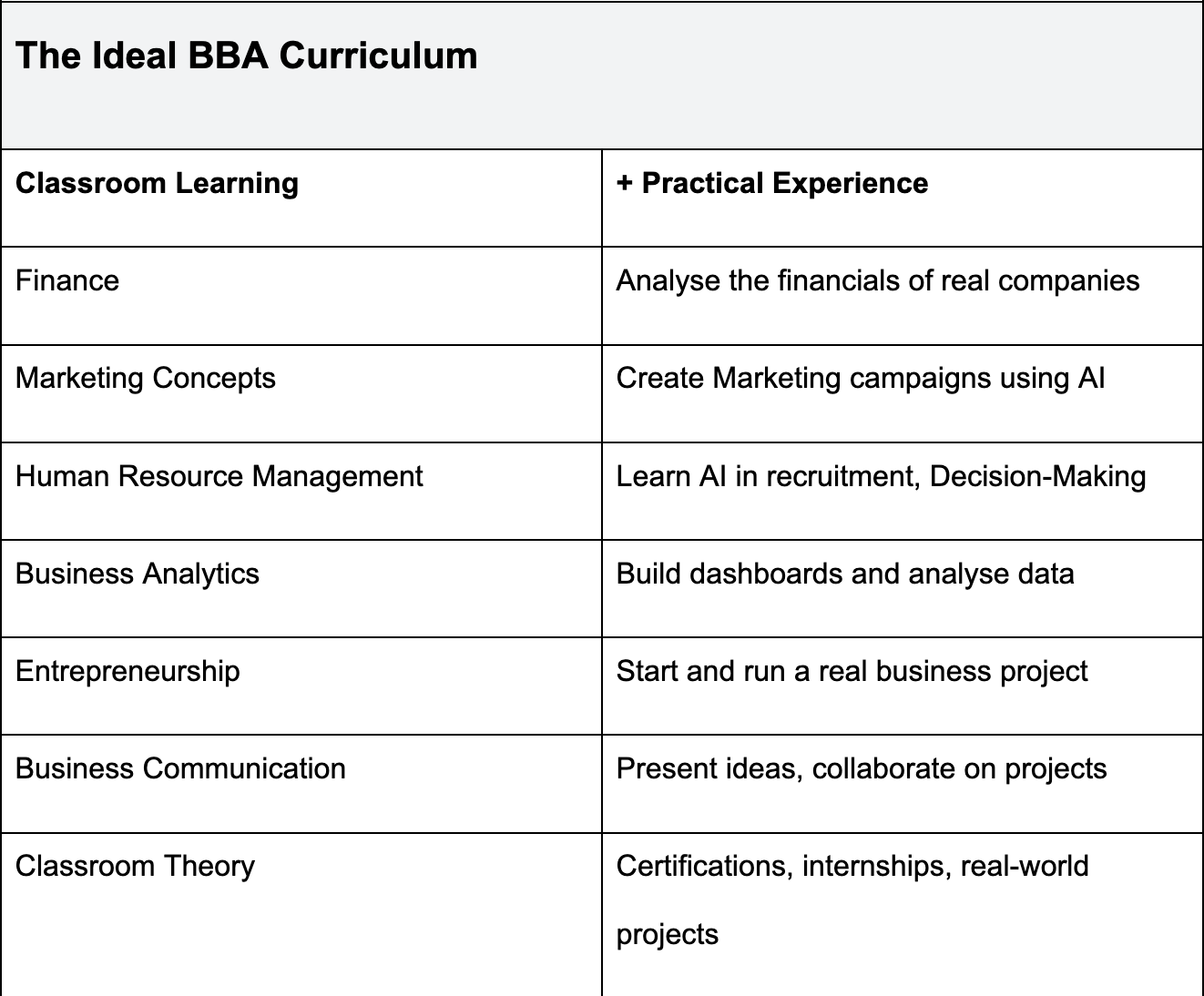
When picking the right BBA college, don’t ask “what subjects will I study?”, ask “what projects will I complete?”
3. Check The Industry Exposure You Will Receive
The Business world exists beyond the classroom, and neither should BBA. The right BBA program should give students a chance to interact with professionals, understand current trends, and so much more. whether its guest lectures, company visits, networking events, all of it can help students understand how to actually work in a business.
When choosing the right BBA college, ask yourself:
□ Do industry professionals regularly interact with students?
□ Are guest lectures, workshops, and more conducted throughout the course?
□ Does the college encourage participation in events and competitions?
□ Are students exposed to real live company projects?
□ Does the college help students have a network before graduating?
Students who have practical experience graduate with more skills and confidence. These experiences also help in choosing career options as well after BBA.
4. Look Beyond The Placement, Check The Career Support
Placements are important but it isn’t the only factor to consider when it comes to future career. What matters is how the college prepares students to be skilled and confident enough to be hired. A good career support is more than just inviting companies to the campus, it’s about resume-building, practice interviews, communication training, internship aid, etc.
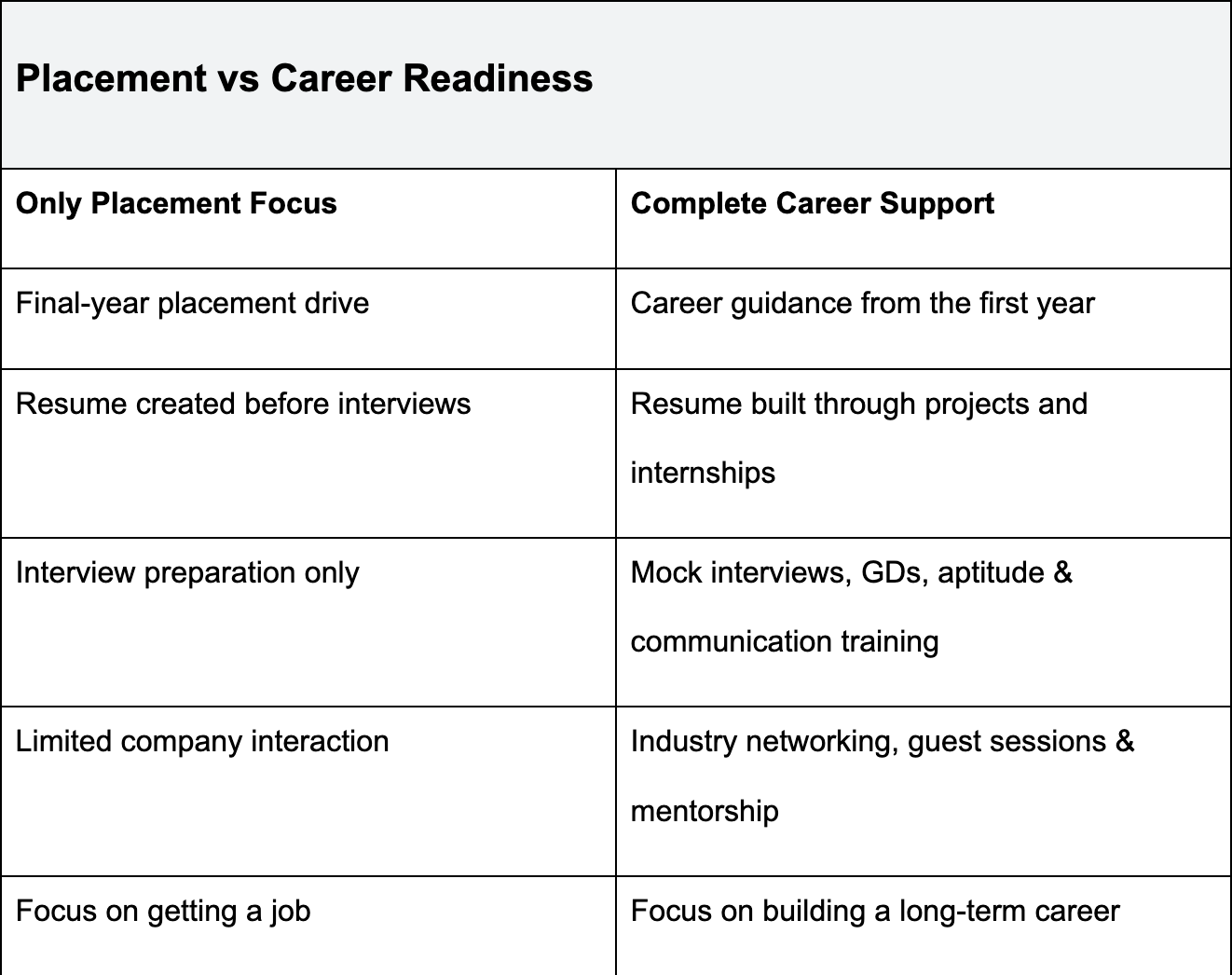
A good BBA doesn’t only just help in getting you your first job, it also helps in providing the skills, confidence, and experience needed to be hired.
5. Check if the Program Is Preparing You for the Future
The business world changes continuously: technology, customer expectations, and AI are transforming industries. While the basics of business are still important, you also need skills to make sure your resume stays relevant in a competitive workforce.
When choosing the right BBA college, look for more than just what the companies need now, consider for the future in advance. The best BBA programs for students after 12th are those that combine the basics with skills, experiences, and exposure.
When considering a college, how many boxes can you tick?
□ Does the curriculum include modern business tools and technologies?
□ Are students exposed to AI and digital concepts?
□ Does the program focus on problem-solving and critical thinking?
□ Will I graduate with projects and practical experience?
□ Are communication and leadership skills actively developed?
□ Does the college help students adapt to changing industry trends?
BBA is a 3-year investment for your future after completing 12th, before choosing the course and college, ask yourself a simple question:
“Will this program only get me a degree, or will it help me build the skills, experiences, and confidence I need to succeed after graduation?”
As business continues to evolve, students need programs that go beyond traditional classroom learning. Schools such as Stride School of Business aim to combine business fundamentals with practical projects, industry exposure, internships, and modern skills that prepare students for the future. The goal isn’t just to help students earn a BBA degree, but to ensure they graduate ready to contribute, adapt, and grow in a changing business environment.
FAQs
1) What is the most important factor when choosing a BBA college?
There isn’t a single factor that determines the right college. Along with placements, students should think about the curriculum, experiences, industry exposure, and career support.
2) Is a traditional BBA still a good choice?
A traditional BBA has a strong foundation in the basics like marketing, finance, human resources, and operations. But as businesses adopt AI, students would benefit from programs that combine the fundamentals with practical skills, technology, and industry exposure.
3) What skills should a BBA student develop during college?
Apart from business knowledge, students should focus on communication, analytical thinking, problem-solving, teamwork, practical experience and more through projects and internships. Being familiar with AI is also valuable across industries.
4) How important are internships during a BBA?
Internships provide students with exposure to industry, helping them apply theory, build professional skills, and gain experience before graduation. They can also strengthen a student’s resume and improve confidence during placement interviews.
5) How can I tell if a BBA program is future-ready?
A future-ready BBA should offer an updated curriculum, practical projects, industry interaction, internship opportunities, and exposure to modern AI. These elements help students graduate with both business knowledge and the practical skills needed in today’s workplace.