18 July 2026
Is BBA a Good Career Choice After 12th?
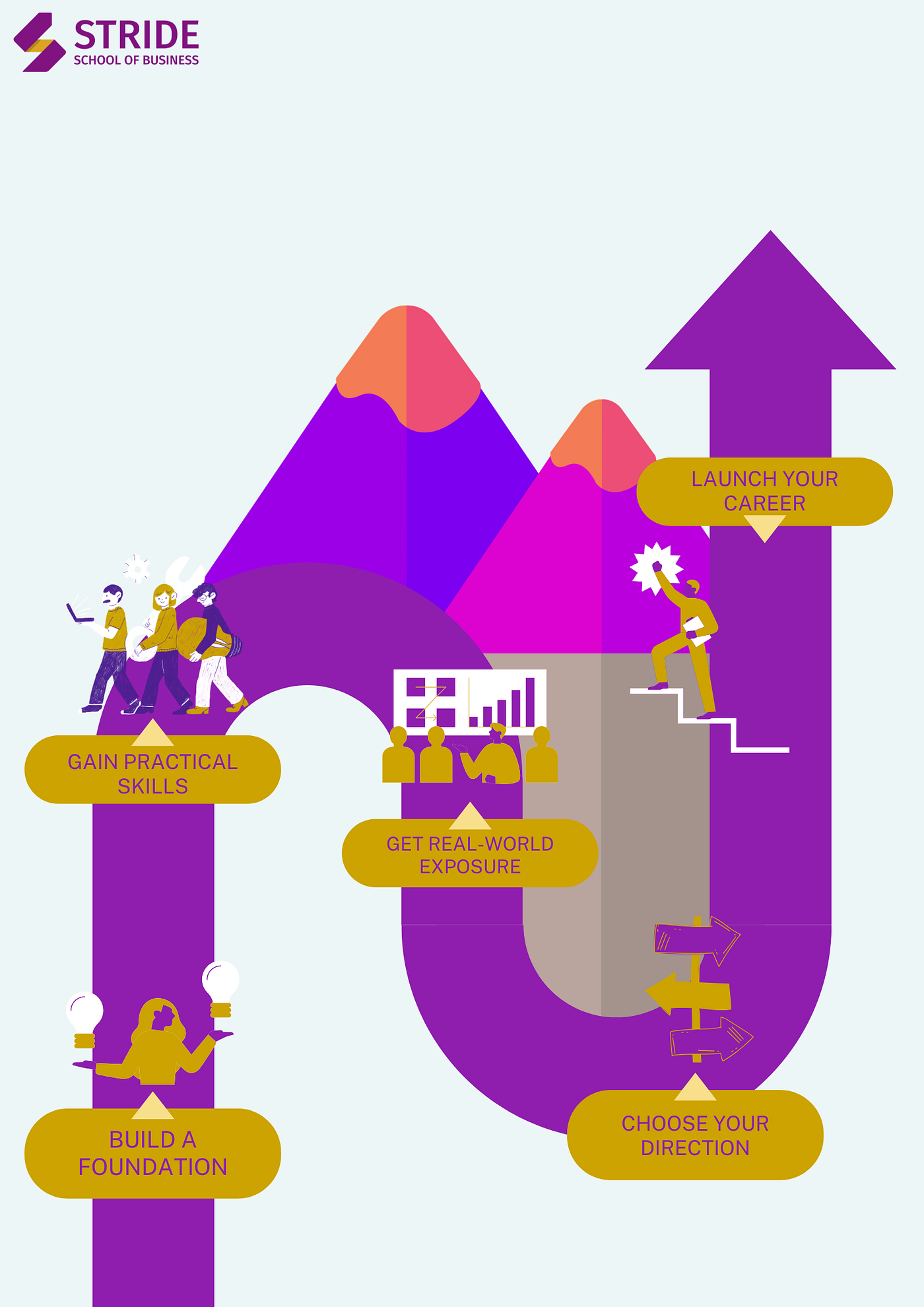
After Class 12, students face countless course options, each promising good career opportunities. Among them, BBA is a popular choice for those interested in business, management, finance, marketing, and entrepreneurship. But as AI has been introduced to the business world, many students wonder whether a BBA is still the right choice for the future.
According to PwC’s Global AI Jobs Barometer 2025, the skills interviewers expect are changing 66% faster in jobs most exposed to AI than in other occupations. As AI becomes part of everyday business operations, students choosing a degree after Class 12 are asking whether a traditional BBA is enough to prepare them for the future.
The answer is yes, but with an important condition. A BBA still provides knowledge in business but interviewers expect students who have completed BBA after 12th to bring more than just theory, they look for skills and experience especially related to AI since it is being used in every business now.
Why Is BBA Still a Good Career Choice After 12th?
A BBA is still one of the most resourceful degrees after 12th. Every organisation, regardless of size or industry, needs professionals who understand business. Whether it’s a startup, a multinational company, a family business, or a non-profit organisation, having skills in marketing, finance, operations, and human resources will always be in demand.
Today, employers expect graduates who can do more than understand business concepts. They value professionals who know how to use AI to analyse companies, make data-driven decisions, and solve real business problems. Modern BBA programs are therefore integrating AI into every stage of learning from AI, and business analytics to building AI agents, creating dashboards, automating business processes, and developing AI-powered strategies. Combined with strong business fundamentals, live projects, internships, and hands-on experience with tools such as Google Ads, Perplexity, Claude and more. This approach prepares students to work confidently in an AI-first business environment.
Career Opportunities After BBA
A big benefit of choosing a BBA is the variety of career paths it opens. Every business requires professionals to manage people, finances, marketing, and operations, BBA graduates can work across industries such as banking, consulting, retail, e-commerce, and startups.
As businesses continue to use AI, many roles are also evolving. Companies look for students who understand business and can work with data, digital tools, and AI to make better decisions and improve business performance.
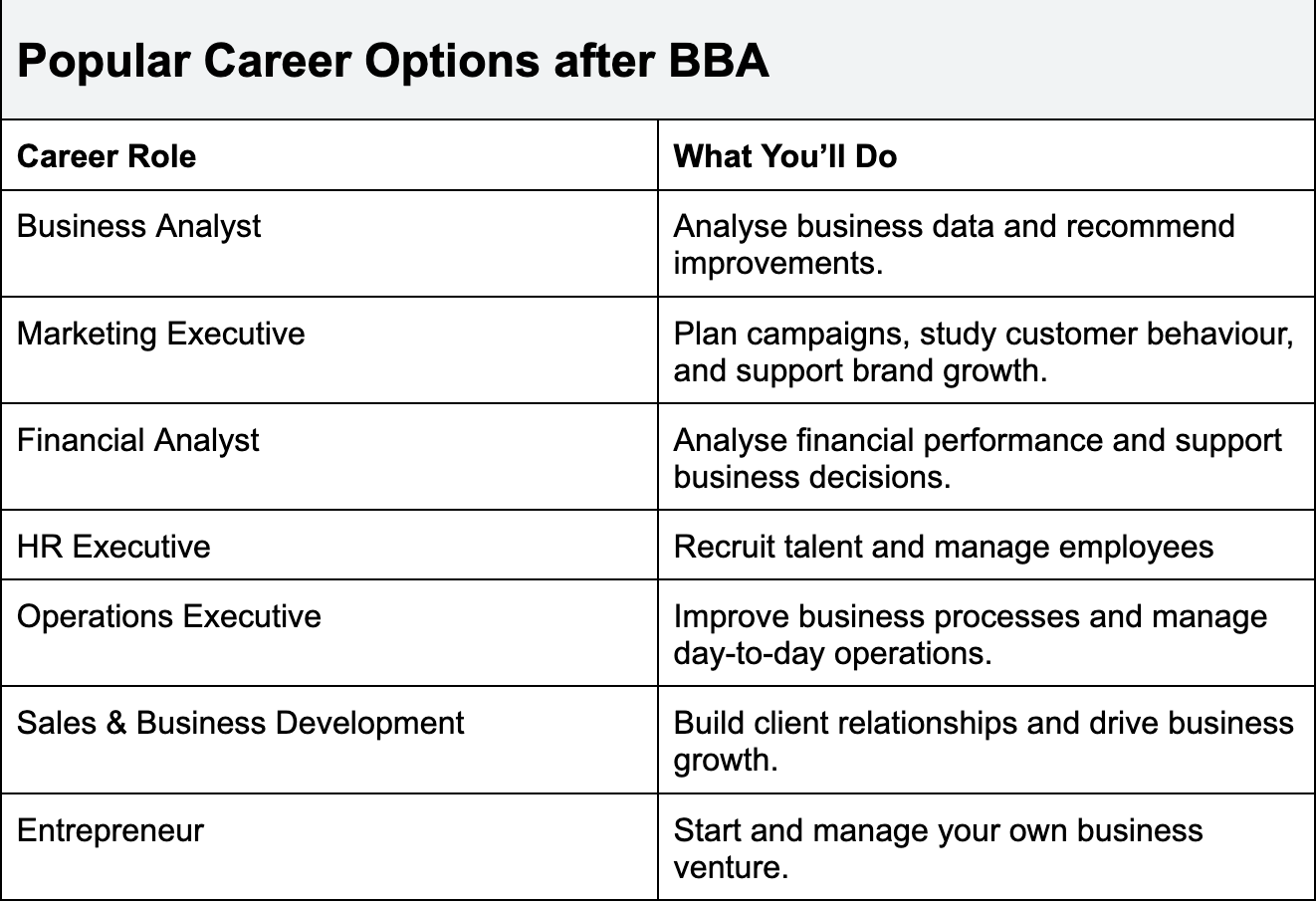
The opportunities after a BBA depend not only on the degree but also on the skills, projects, internships, and experience students gain during college. This along with your academic foundation can help you gain an edge in a competitive job market.
Is Every BBA Enough in Today’s Business World?
A BBA is a valuable degree, but the business world has changed a lot over the past few years. Businesses are using AI and data analytics in almost every department. So employers are looking for students who understand business concepts and can apply them using modern tools.
The way business functional departments operate has changed. Today’s professionals are expected to analyse data, use AI to improve productivity, and make faster, better-informed decisions.
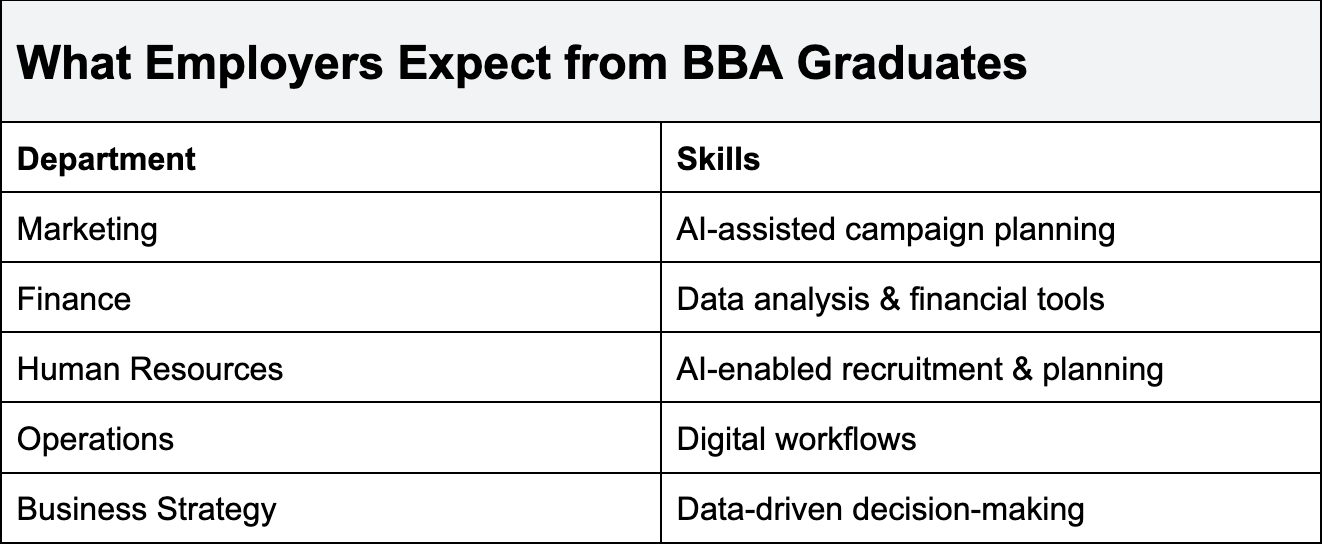
A good BBA program today won’t replace business education with AI but it builds on the basics by helping students develop practical skills.
What Does a Modern BBA Look Like?
A BBA is a good career choices after 12th, choosing the right program is as important as the degree itself. The best BBA programs combine business fundamentals with application and experience.
This is the approach followed at Stride School of Business, India’s first AI-native business school. Along with the core subjects of a BBA, students work on real business projects, analyse listed companies, build AI-powered marketing campaigns, create business dashboards, launch entrepreneurial ventures, complete internships, and earn industry-recognised certifications. Instead of graduating with only classroom knowledge, students build a portfolio of experience that shows their understanding and ability to apply AI tools in real business situations. Entrepreneurship at Stride School of Business is more than just business plans and classroom situations. Students get the opportunity to build and launch real ventures during the program. Promising business ideas will also receive seed funding of up to ₹1 crore, giving students the opportunity to start their ventures while still in college.
The actual question isn’t whether a BBA is a good career choice after 12th, it absolutely is. The important question is whether the program you choose prepares you for your careers in future. A BBA should help students with the fundamentals, experience, and the confidence to succeed in an AI-driven business world.
FAQs
1) Is BBA a good career choice after 12th?
Yes. A BBA is one of the most popular courses after 12th for students interested in business, management, entrepreneurship, and leadership. It provides a strong foundation in business while opening doors to careers across multiple industries and higher education opportunities such as an MBA.
2) Can science students go for a BBA?
Absolutely. Students from Commerce, Science, and Humanities backgrounds can pursue a BBA. The course focuses on developing business knowledge, communication, leadership, and management skills rather than having requirements.
3) What skills should I develop during a BBA?
Students should focus on communication, problem-solving, data analysis, teamwork, leadership, AI tools, and practical experience through projects and internships.
4) Is a BBA still relevant in today’s job market?
Yes, but updated BBA programs are the most valued. Programs that combine business education with practical learning prepare students for their future careers.
5) How do I choose the right BBA program after 12th?
Look for more than just rankings. Look at the curriculum, practical projects, internships, industry exposure, placement support, certifications.