1 July 2026
The Biggest AI Myths Business Students Still Believe
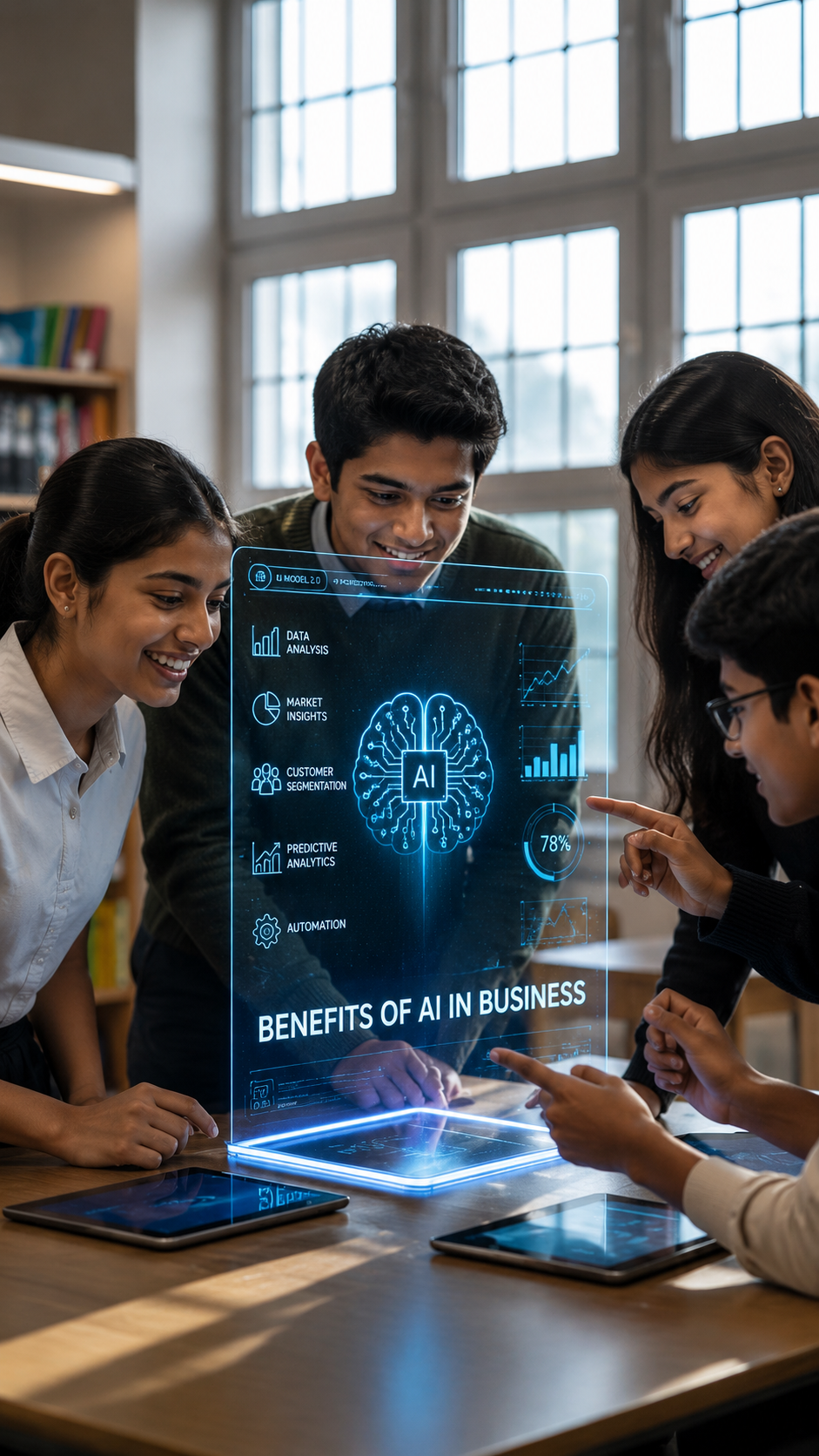
AI is a tool that is widely used around the world, even across business industries. However, there are still many misconceptions about what AI can and cannot do. Some believe it will replace jobs, others believe it will make business professionals more productive, and many think learning tools like ChatGPT is all they need to be prepared. With so much information online, it can be difficult to know what is actually true.
According to KPMG’s Global AI Trust Survey 2025, while AI adoption continues to grow, many people still misunderstand how AI should be used and evaluated in the workplace. As AI becomes a part of everyday business operations, it is becoming increasingly important for business students to separate the myths from reality.
So, what are the biggest AI myths business students still believe?
Why Do So Many AI Myths Exist?
AI has developed significantly over the past few years. New tools and updates are released frequently, making it difficult for many to keep up. At the same time, social media, news headlines, and online discussions can often focus on extreme opinions.
For business students, this can create confusion. Some believe AI will replace every business job, while others think simply learning a few AI tools will guarantee career success. In reality, neither is true.
Understanding what AI can and cannot do is the first step towards preparing for the future of business. Once students separate facts from misconceptions, they can focus on building the business knowledge and practical skills that employers actually value.
The Biggest AI Myths Business Students Still Believe
Myth #1: AI Will Replace Every Business Job
Many students worry that AI will replace business graduates because it can write content, analyse data, and create presentations.
Reality: AI is changing the way people work, not replacing professionals. Companies still need people who can solve business problems, think strategically, and make informed decisions. AI is a tool that supports these skills rather than replacing them.
Myth #2: Learning ChatGPT Is Enough
Some students believe that knowing how to use ChatGPT is all they need to be experts in AI.
Reality: ChatGPT is only one of many AI tools used in business. Employers value graduates who know how to use different AI tools for different business tasks like using Claude and Perplexity for research and analysis, Canva AI for marketing content, Julius AI for data analysis, Gamma for presentations and more. The real benefit comes from knowing how to use the right AI tools for different tasks.
Myth #3: Business Fundamentals Are No Longer Important
As AI becomes more capable, some students assume that learning finance, marketing, or operations is no longer necessary.
Reality: AI can support business decisions, but it cannot replace business knowledge. Understanding financial statements, business strategy, customer behaviour, and operations is crucial for making the right decisions.
Myth #4: Learning AI Is Only for Technology Professionals
Many students think learning AI is only useful for software engineers or data scientists.
Reality: AI is not limited to technology professionals. AI is now used across all functions of a business from marketing to human resources, finance, operations, and strategy to create more personalized marketing campaigns, analyze financial statements better, and support in decision-making regarding strategy and recruitment. Every professional will benefit from understanding how to use AI effectively.
Myth #5: AI Is Just a Temporary Trend
Some believe AI is another technology trend that will eventually disappear.
Reality: Businesses around the world are continuing to invest in AI and integrate it into their everyday operations. AI is becoming another tool that future business professionals are expected to understand.
What Should Business Students Actually Focus On?
Instead of worrying about AI replacing jobs, students should focus on building the skills that employers will continue to value like a strong foundation in business. Students should understand the fundamentals before learning how to use AI.
Students should develop practical AI skills that would help them work effectively like analysing and breaking down a listed company’s growth and finances, generating marketing content using AI, and more. The aim is to combine business knowledge with AI to make better business decisions.
This is the approach followed at Stride School of Business, India’s first AI-native business school. Students learn business fundamentals while working on real business projects throughout the three-year program. They analyse listed companies, build AI-powered marketing campaigns, create business dashboards, develop business strategies, complete internships, and apply AI across different business functions instead of learning it as a separate subject.
Throughout the degree, students build a portfolio through 25+ real business projects, earn 10+ industry-recognised AI certifications from organisations such as Google, IBM, Microsoft, and HubSpot, and gain opportunities to launch entrepreneurial ventures. Promising student startups also receive seed funding of up to ₹1 crore, helping students turn innovative business ideas into real companies while still in college.
Final Perspectives
AI is changing the way businesses operate, but common beliefs about AI are based on misconceptions rather than reality. While AI can improve productivity and support decision-making, it cannot replace business knowledge, strategic thinking, or human judgement.
For business students, the focus should not be on fearing AI or simply learning a few AI tools. Instead, the goal should be to build a strong foundation in business while developing the practical skills needed to use AI.
As businesses continue to evolve, the graduates who combine business fundamentals, practical experience, and AI skills will be better prepared for placements, higher studies, entrepreneurship, and long-term career success.
FAQs
1) Will AI replace business jobs?
No. AI is not replacing business professionals. Employers need people who can think strategically, communicate effectively, and make informed decisions using AI.
2) Do business students need to learn coding to use AI?
No. Basic technical knowledge can be helpful, but business students are not expected to become software engineers. Understanding how to apply AI in business is far more important.
3) Is learning ChatGPT enough to become AI-ready?
No. ChatGPT is only one AI tool. Business students should also understand AI evaluation, business analytics, and how to apply different AI tools in real business scenarios.
4) Should business students still learn business fundamentals?
Absolutely. Subjects like finance, marketing, business strategy, operations, and human resource management remain the foundation of a business career. AI works best when combined with strong business knowledge.
5) What should I look for in an AI-native business school?
Choose a program that integrates AI throughout the curriculum rather than teaching it as a separate subject. Look for opportunities to work on live business projects, internships, and build practical experience. For example, Stride School of Business combines business fundamentals with AI, real-world projects, internships, and entrepreneurial opportunities.